Cooperatives as an alternative business model
Dave Holm, executive director, Iowa Institute for Cooperatives led a round table discussion at the Midwest Rural Assembly. Since 2012 is the International Year of the Cooperative, this is an opportune time to share that discussion.
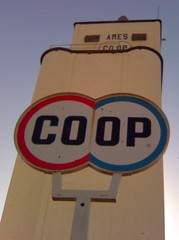 |
| The Farmers’ Cooperative Ames, Oklahoma |
A cooperative is no different than any other business in this respect: you have to follow the same business principles. You make decisions differently and distribute profits differently, Holm said.
First steps are to write the business plan and make sure it would work as a business. Then think about the form of the business, Holm said. You need a champion; someone from within the community.
Minnesota has a hybrid cooperative form, combining an LLC with a cooperative. It can have community ownership, but with outside capital investment. The patrons can decide how much ownership to surrender for the investment, and also determine the payout and investment return on liquidation.
Get an attorney who already understands cooperatives, Holm advised. Otherwise they don’t understand it, and they don’t want to learn.
Make sure your board listens to management, especially with ag producer cooperatives, several of the discussion participants said. Farmers aren’t marketers. All-farmer boards or mostly farmer boards are a failure factor. They will vote to suck out their equity and kill it, one participant said. Do the leadership development needed to help the board succeed.
Another participant told how Canada is using cooperatives to maintain school buildings, after the school is closed. Because the school building is a center of the community, they are using this method to keep it open as a community center. They get the youth involved in the management of it.
New to SmallBizSurvival.com? Take the Guided Tour. Like what you see? Get our updates.
- About the Author
- Latest by this Author

Becky started Small Biz Survival in 2006 to share rural business and community building stories and ideas with other small town business people. She and her husband have a small cattle ranch and are lifelong entrepreneurs. Becky is an international speaker on small business and rural topics.